

A working admin in one file — models, a resource, an account to sign in with, and the screens you get for free.
Five minutes, one file, and a running admin.
Install
Section titled “Install”pip install "sillo-framework @ git+https://github.com/sillohq/core@main"pip install warder --no-depsSillo v1 is not on PyPI yet, so the framework comes from git and Warder is
installed without re-resolving it. Once v1 ships this is one pip install.
One file
Section titled “One file”from tortoise import Tortoise, fields
from sillo import SilloAppfrom sillo.record import DatabaseConfig, Model, setup_recordfrom sillo.users import Userfrom warder import Admin, Auth, Column, Gate, List, Resource, Sort
app = SilloApp()
class Student(Model): admission_no = fields.CharField(max_length=20, unique=True) first_name = fields.CharField(max_length=60) last_name = fields.CharField(max_length=60) status = fields.CharField(max_length=20, default="enrolled") admitted = fields.DateField(null=True)
def __str__(self) -> str: return f"{self.first_name} {self.last_name}"
class Meta: table = "students"
admin = Admin(title="Ridgeway College", prefix="/admin", auth=Auth(users=User))admin.add(Resource(Student))
db = setup_record( app, DatabaseConfig.sqlite("school.db"), model_modules=["app", "sillo.users.base"],)Tortoise.init_models(["app", "sillo.users.base"], "models")admin.mount(app)Three lines of that file deserve a note.
model_modules names sillo.users.base, not sillo.users. Model discovery
reads a module’s own definitions, so the package that re-exports User finds
nothing — and Tortoise says Module "sillo.users" has no models and carries on.
Tortoise.init_models links the foreign keys without opening a connection.
mount resolves every declaration against the models, so they have to be linked
before it runs, and setup_record only does that at start-up.
admin.mount(app) is where every declaration is checked. A start-up that gets
past this line has an admin whose every reference resolves.
An account
Section titled “An account”sillo user:admin you@example.com # or: warder create-admin app:adminuvicorn app:app --reloadGate.staff() is the default, and it matters: when the admin shares the
application’s user model — the ordinary arrangement — every registered account
holds a session, and admitting anyone who has one hands over the database.
is_staff is the flag that separates the two, and both commands set it.
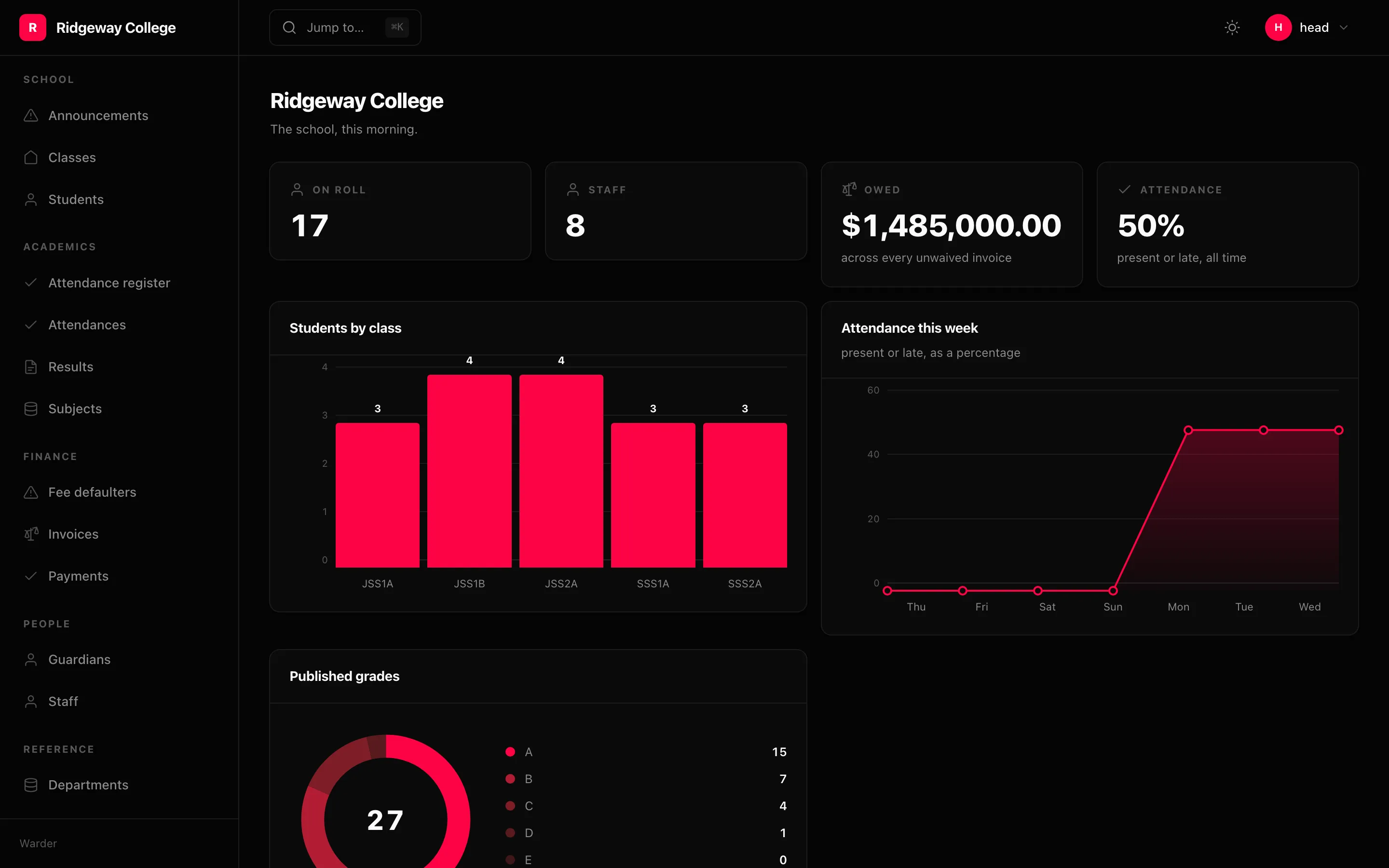
What you already have
Section titled “What you already have”Resource(Student) names one model and nothing else, and you get:
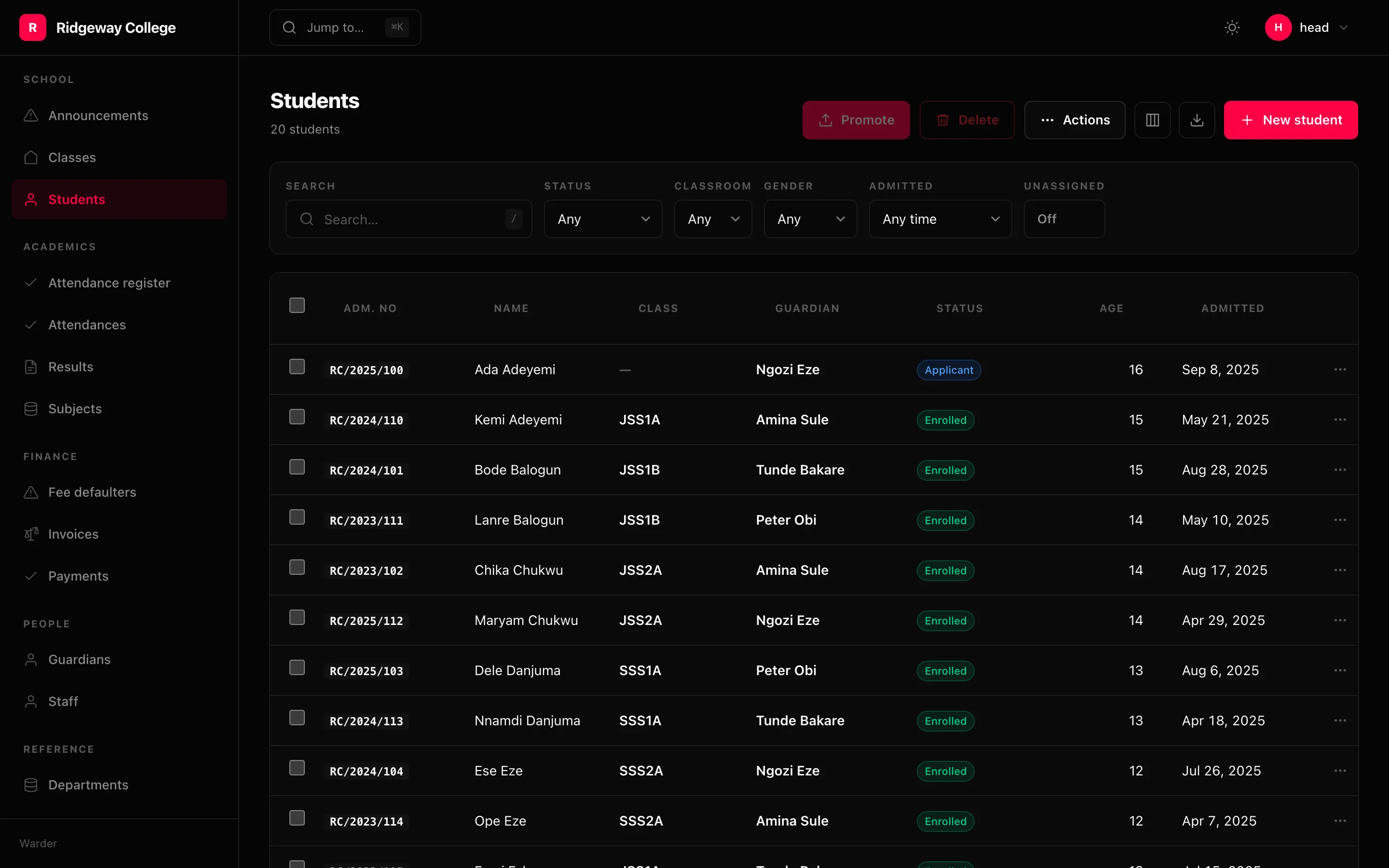
A list with the columns the model has, a search box over its text columns, a filter per state column, sensible ordering, paging, selection, CSV and JSON export — and a form and a detail page to match.
Everything derived is replaced by naming it. The next page is about how.
The full example
Section titled “The full example”Every screenshot in this manual comes from a school management platform in one
file: thirteen models, roles, row-level scope, a many-to-many, actions that
collect input, two custom pages and a dashboard. It is in the Warder repository
as app.py, and it is what the tests run against.